

Quality inspection with cobots
Automated inspection: visual, tactile, and physical
Quality control is the decisive factor for product safety. However, manual inspections—whether visual inspections or those performed using handheld measuring devices—are subject to human error. In addition, many modern inspection methods (such as ultrasonic scans) are difficult to perform manually with the necessary consistency.
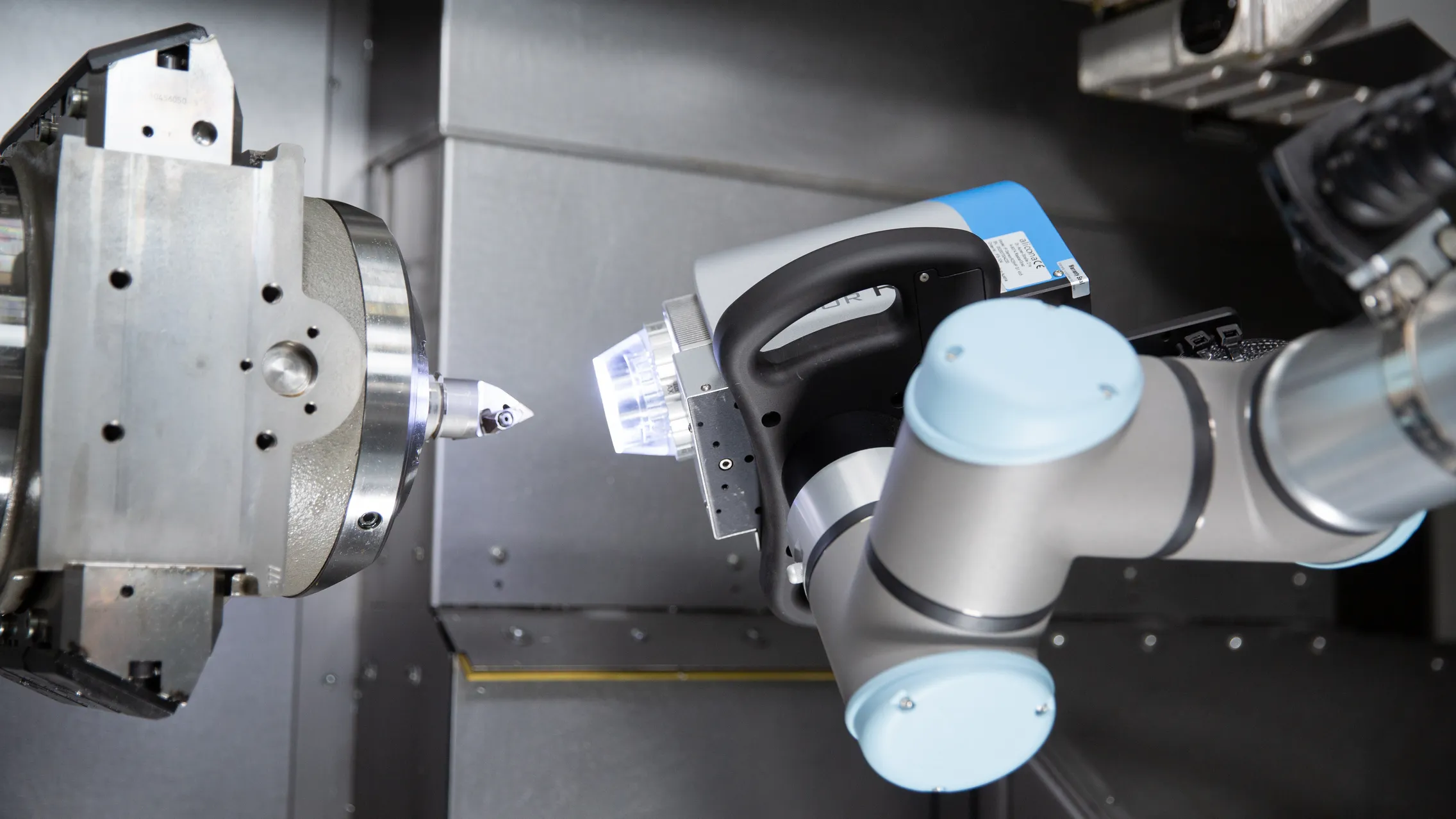
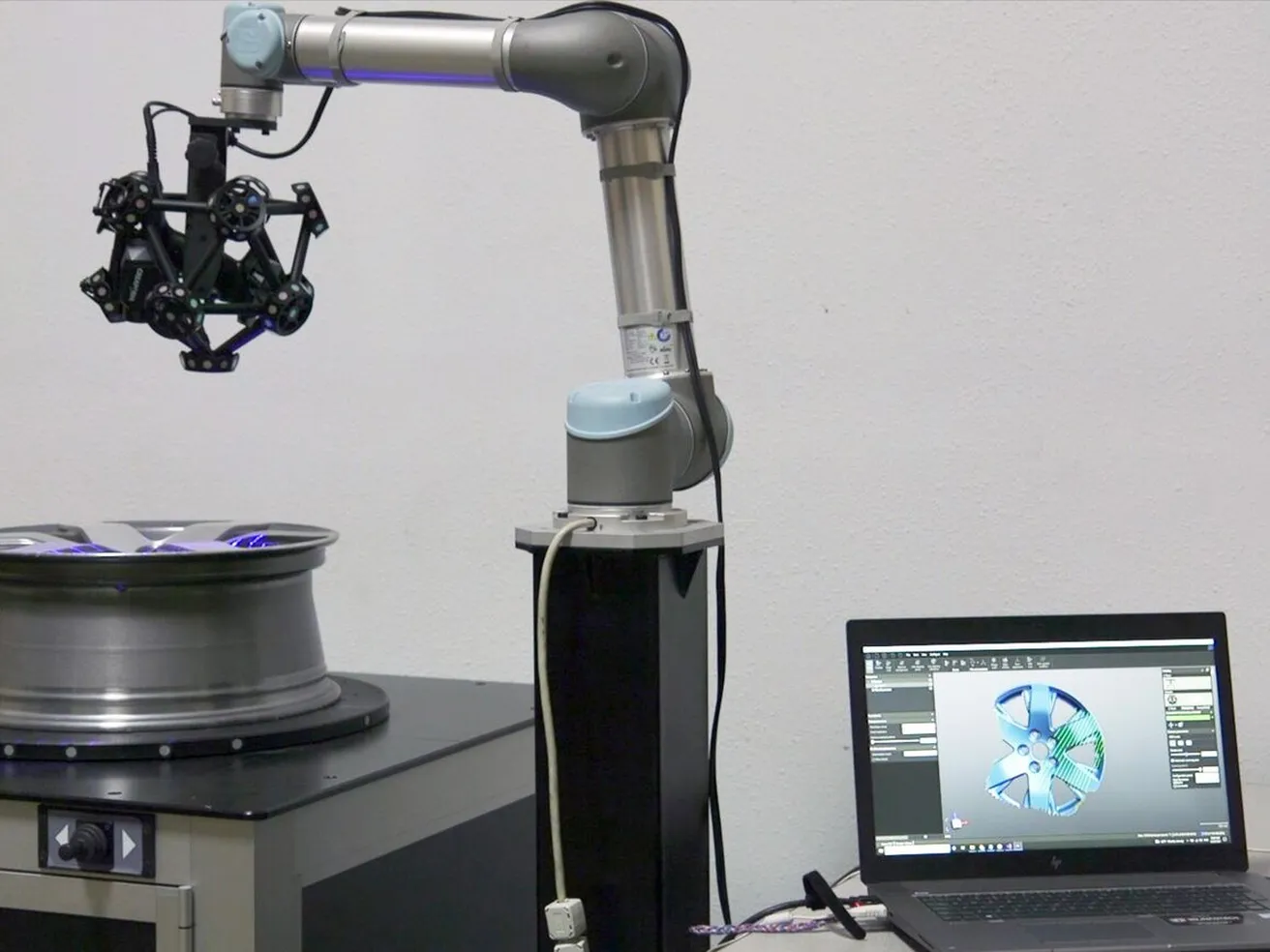
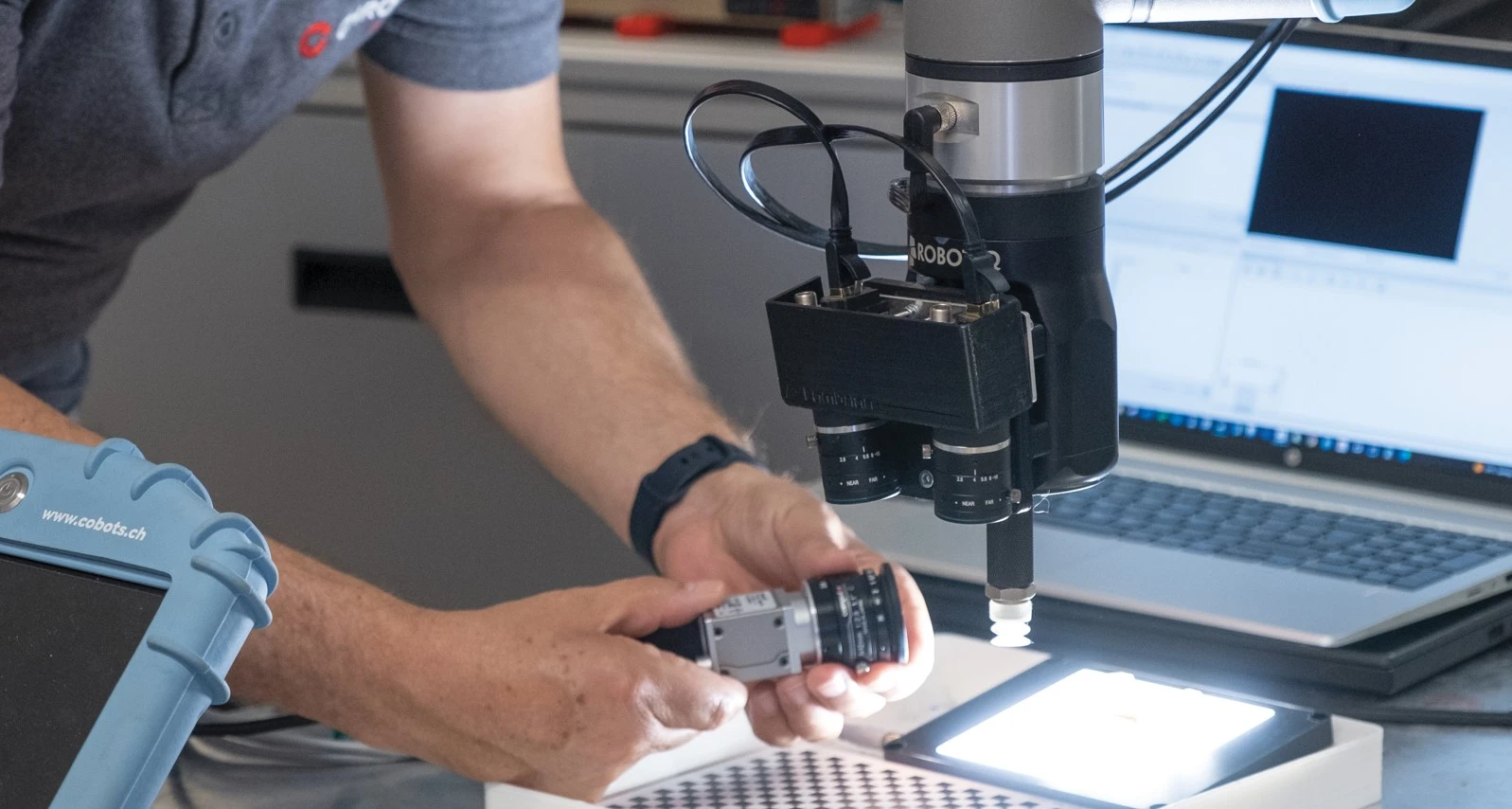
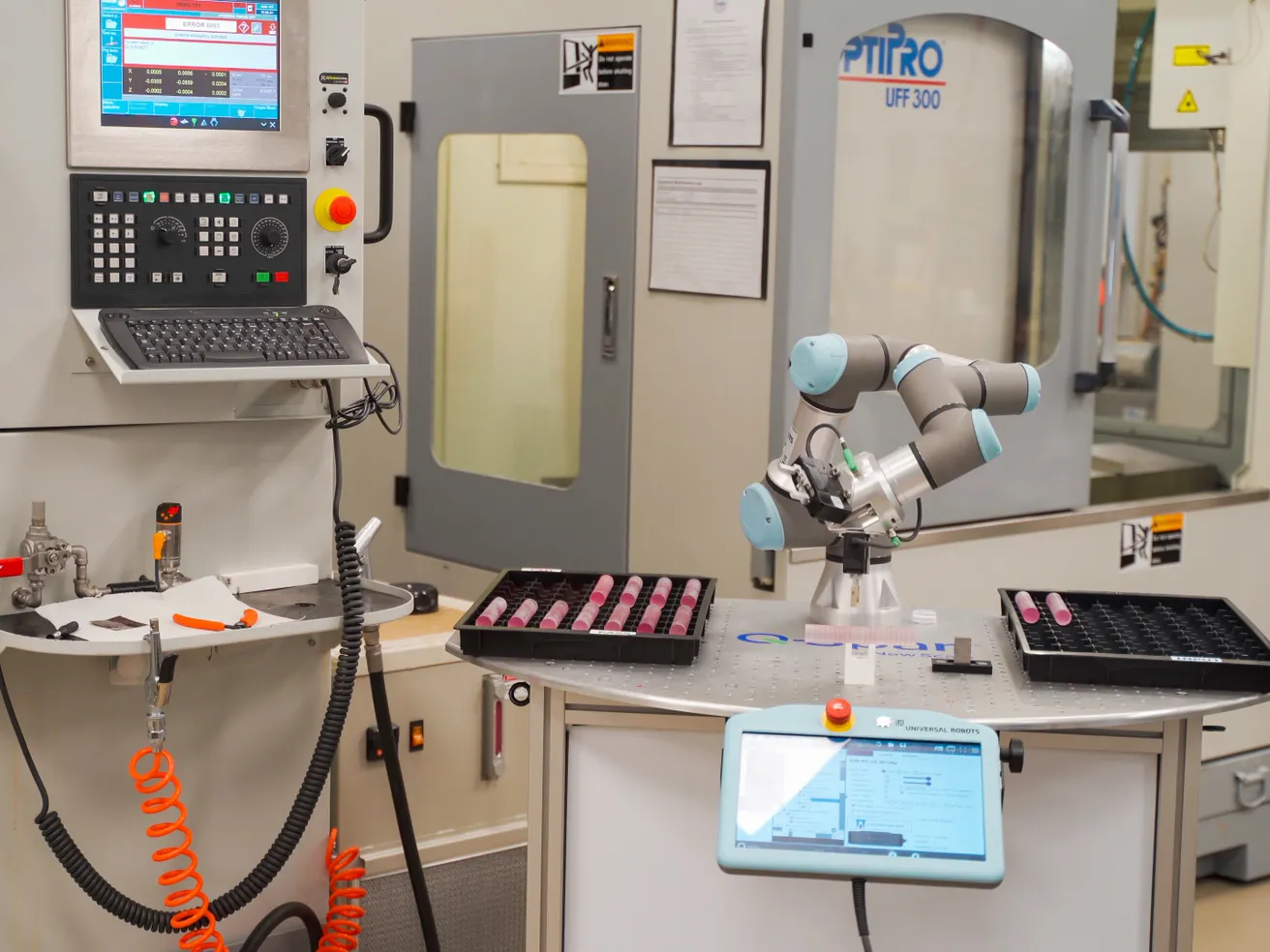
Cobots offer the ideal platform for precise measurement technology. They act not only as camera carriers, but also as high-precision measuring arms. Whether the robot is holding a camera, guiding a measuring probe, or moving an ultrasonic head over a complex surface, it guarantees that the position, angle, and contact pressure are exactly the same for every measurement.
Get in touch with usThe advantages
Multimodal testing: A cobot is not limited to one technology. It can perform visual inspections (vision), press buttons (haptic testing), or scan surfaces with sensors (NDT). This makes it a universal test bench.
Reproducibility on contact: Constant guidance of the sensor is crucial for tactile measurements or non-destructive testing (e.g., eddy current). The robot eliminates the "shaking" of the human hand and ensures reliable measurement data.
Objectivity and documentation: An automated system strictly checks for limit values. It delivers consistent results regardless of the time of day and enables complete logging of all measured values for traceability.
challenges
The automation of testing processes places high demands on precision and integration. We address these with proven methods:
Complex 3D contours
A sensor (e.g., for ultrasound) often has to be guided exactly perpendicular to the surface along a curved path. The solution: we use the cobot's six degrees of freedom. Using CAD data or simple teaching, the robot arm follows the free-form surface of the component, keeping the sensor at the correct angle to the surface at all times.
Visual distractions
Changing ambient light or reflective surfaces can distort optical measurement results. The solution: By using specialized lighting technology, telecentric lenses, and AI-supported cameras, we create consistent conditions and reliably detect features even on difficult materials.
data integration
The test results must be further processed in the production process. The solution: Our systems communicate with your PLC (IO/NIO signals) via common fieldbus protocols and transfer measurement data and images directly to your QA system for archiving.
Experience UR cobots in action
Book a cobot demoSuitable technologies
The reliability of automated testing depends largely on the perfect interaction between the robot's motion mechanics and the sensor technology used. A robot arm provides the necessary repeatability, but only the right sensor makes it a fully-fledged and objective testing device.
The requirements vary greatly: While optical inspections require precise coordination of lighting, optics, and camera, tactile or non-destructive testing (NDT) methods often require constant contact pressure and precise path guidance along complex surfaces. We therefore do not configure a rigid standard product, but rather a complete technological system that combines the flexibility of cobots with the optimal measurement and inspection technology for each application.
cobot
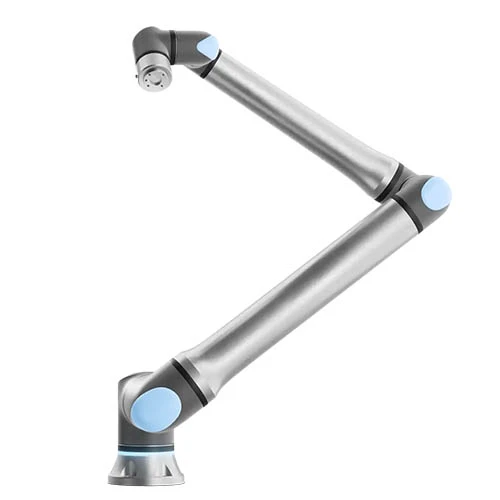
Universal Robots' cobots ensure the necessary positioning accuracy. Thanks to their integrated force/torque sensors, they can maintain constant contact pressure during contact measurements or gently place components into a measuring device.
About cobots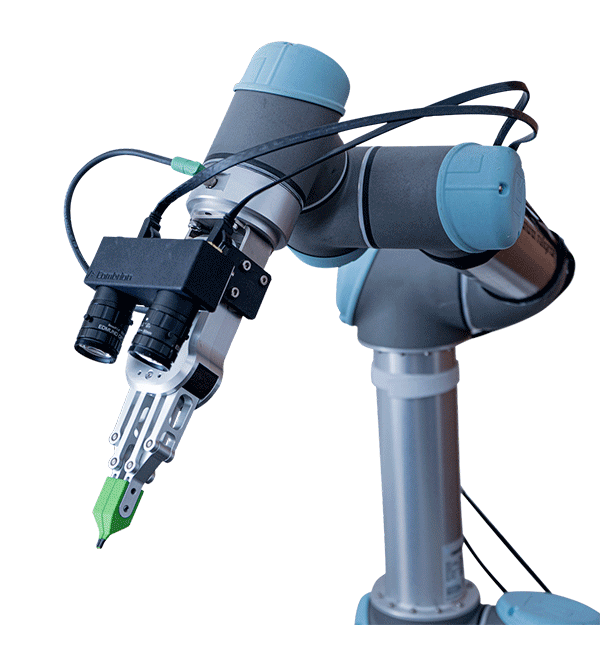
Machine vision components
We rely on a wide range of technologies to solve every optical challenge:
- Classic 2D cameras: High-resolution area scan cameras (e.g., Basler) for precise measurements or smart cameras (e.g., Cognex) for fast code reading.
- AI-supported & 3D vision: For complex tasks, we use modern vision systems that work with artificial intelligence. These systems are extremely robust in changing ambient light conditions and reliably detect even transparent, black, or highly reflective components that conventional sensors fail to detect.
- Lighting & optics: Choosing the right lighting (e.g., dome, ring, or bar lights) and telecentric lenses is crucial for image contrast.
Physical & Tactile Testing
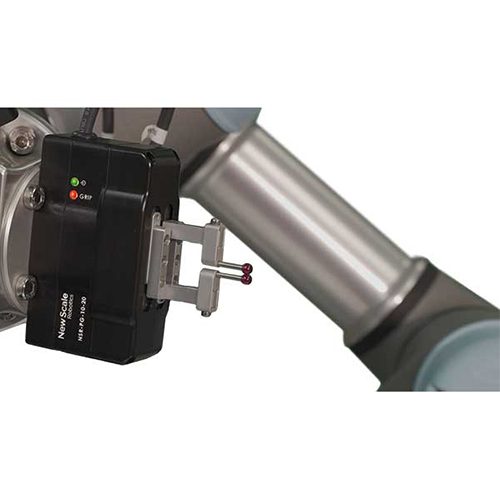
Since each testing task (e.g., ultrasound, eddy current, probe) requires highly specialized sensors, we connect the appropriate measuring device to the robot depending on the requirements. The cobot serves as a universal platform that precisely guides third-party sensors and transfers the measurement data to your IT system.
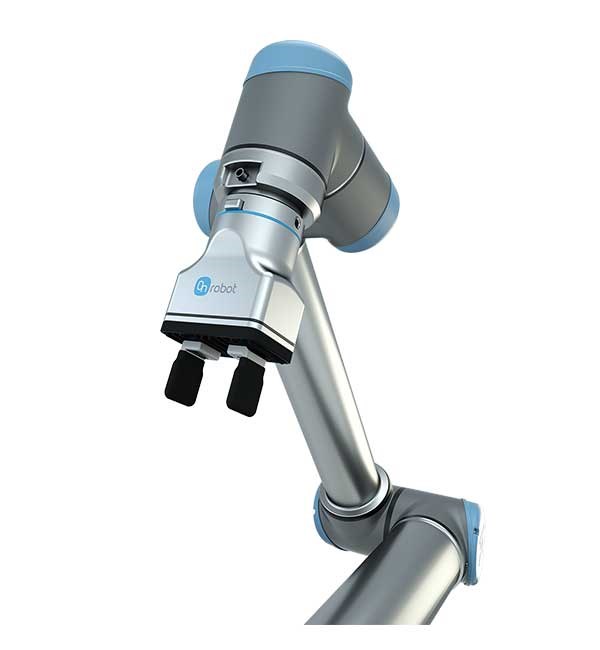
gripping technology
Fixation is crucial in part-to-sensor applications. We use precise gripper that hold the component securely without covering the areas to be tested (e.g., through internal gripping or vacuum technology).
About the gripperssolution finding
1. Analysis of the test task What is the criterion? Is it about visual defects (scratches, labels), dimensional accuracy (geometry), or internal defects (voids, cracks)?
2. Technology selection
- Visual: We test cameras and lighting in our vision lab.
- Physical: We check which sensor (button, NDT probe) is required and how we can connect it mechanically and electronically to the robot.
3. Feasibility study We simulate the process: Can the robot reach all measuring points on the component? Can the cycle time be maintained? How must the data (pass/fail) be transmitted?
4. Integration We connect the robot to the measuring device. The robot triggers the measurement as soon as the position is reached and receives the result back for documentation.


Get in touch with us