

Machine feeding with cobots
Maximize machine utilization and reduce the workload on your team
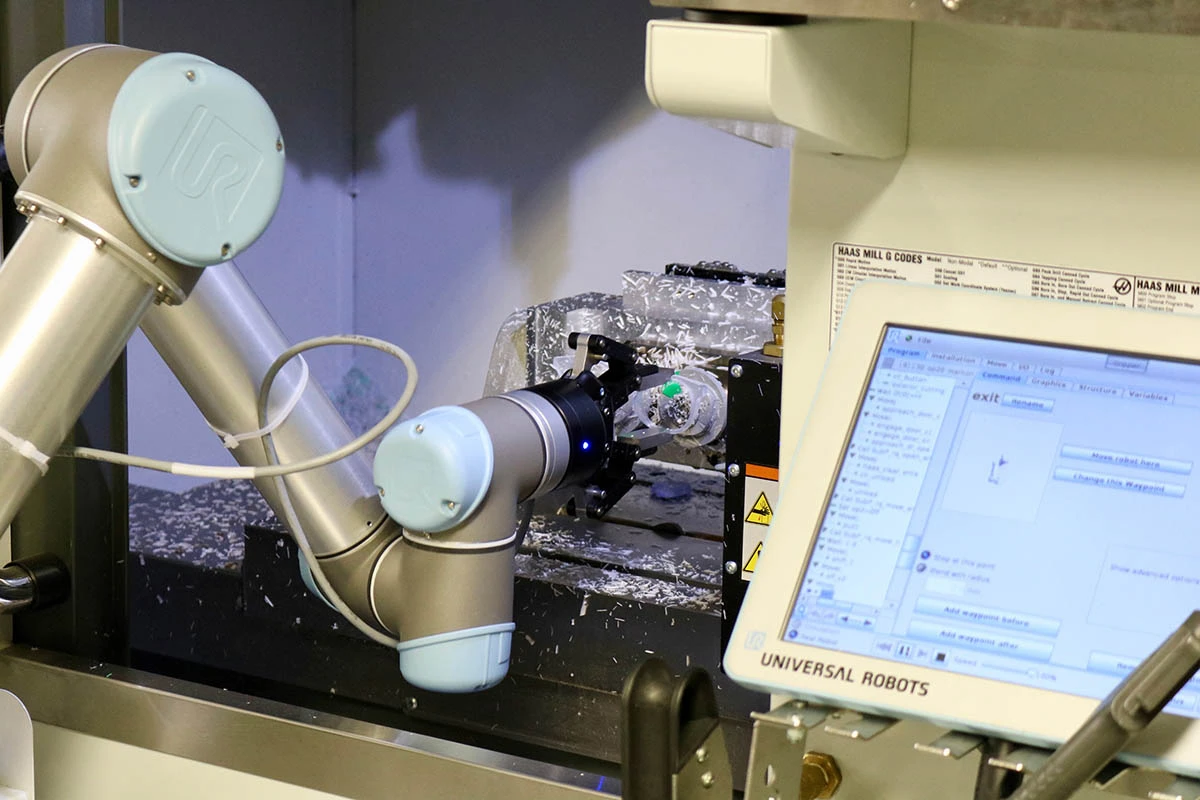
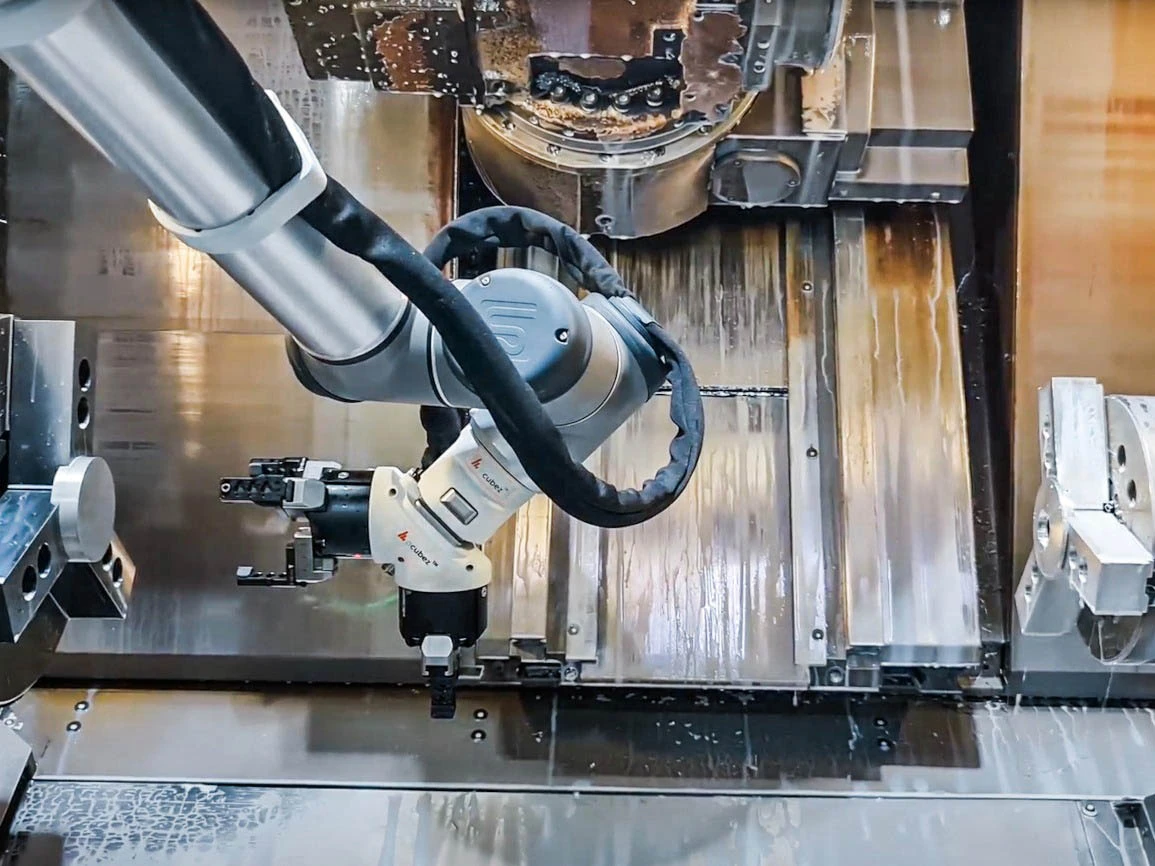
Manually loading CNC milling machines, injection molding machines, or presses is a monotonous and often physically demanding task. In addition, machines often stand idle when employees take breaks or shift changes occur.
Cobots help you bridge these gaps: collaborative robots work tirelessly, precisely, and around the clock. They take care of loading raw parts and unloading finished parts, allowing your skilled workers to focus on value-adding tasks such as quality control and process optimization.
Get in touch with usThe advantages
Higher machine utilization:A cobot does not take breaks. It can run ghost shifts and keep your machines productive even at night or on weekends. The result is a significant increase in OEE (Overall Equipment Effectiveness).
Health & safety: Free your staff from ergonomically unfavorable movements and handling heavy or sharp-edged parts. The cobot takes over dangerous tasks directly on the machine and reduces the risk of injury.
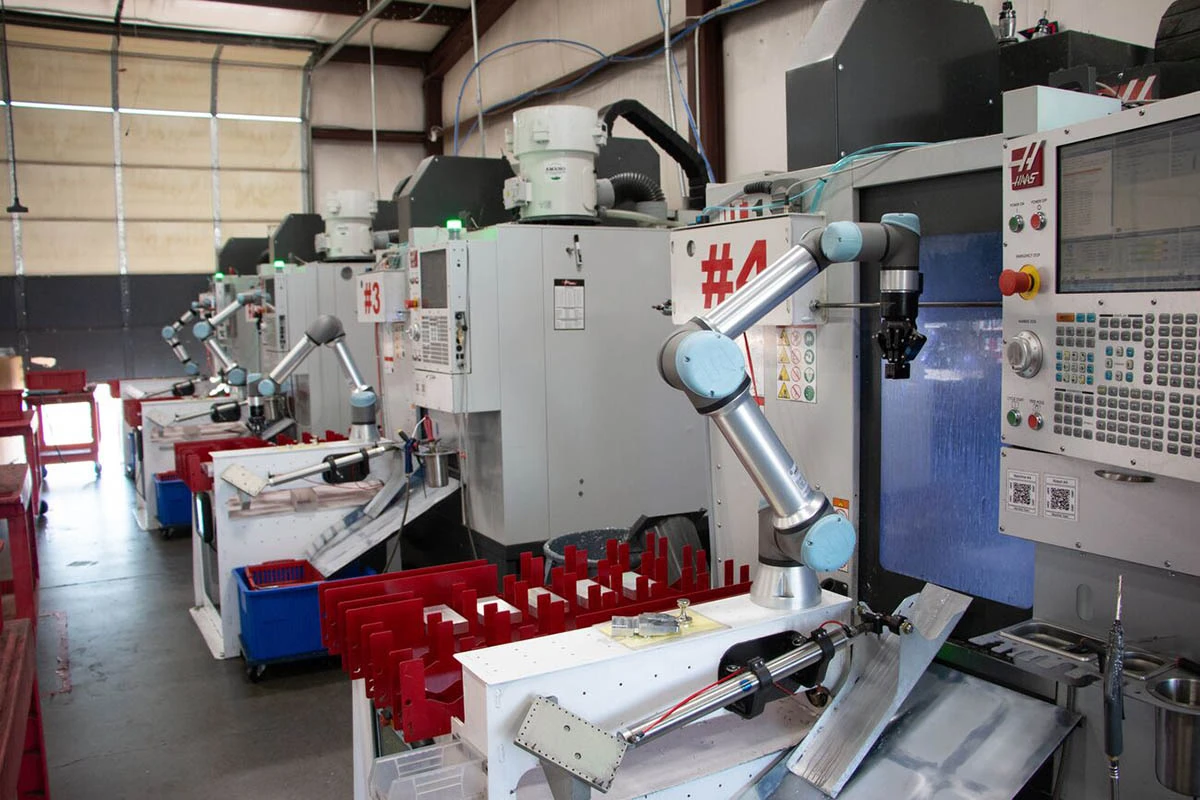
Flexibility in production: Thanks to fast changeover times, cobots are perfect for high-mix/low-volume manufacturing. Today, a robot can be working on a CNC milling machine, and tomorrow it can be operating an injection molding machine—ideal for changing orders.
challenges
Automating machine loading often seems complex. We offer simple solutions for the typical hurdles:
Seamless communication (interfaces)
Machines and robots must speak the "same language."
The solution: We use standardized interfaces (e.g., IMMI option for injection molding machines according to EUROMAP 67/E67 or simple digital I/O modules). This enables a fast "plug-and-play" connection without days of driver programming.
Changing components & small series
Reprogramming for each new job deters many people.
The solution: Thanks to the intuitive interface of UR cobots and flexible gripping systems, product changes can be completed in just a few minutes. You save the sequence once and simply call it up again for repeat jobs.
Lack of space in production
Traditional industrial robots require large protective fences that take up valuable space.
The solution: our cobots are collaborative and safe. After a risk assessment, they can often work right next to the operator without a protective fence and, if necessary, can simply be moved aside to allow access to the machine.
Experience UR cobots in action
Book a cobot demoSuitable technologies
Smooth interaction between robots, gripping technology, and machine tools is crucial for efficient and autonomous machine loading. The key to success lies not only in mechanical precision, but above all in seamless communication between the cobot and your production system.
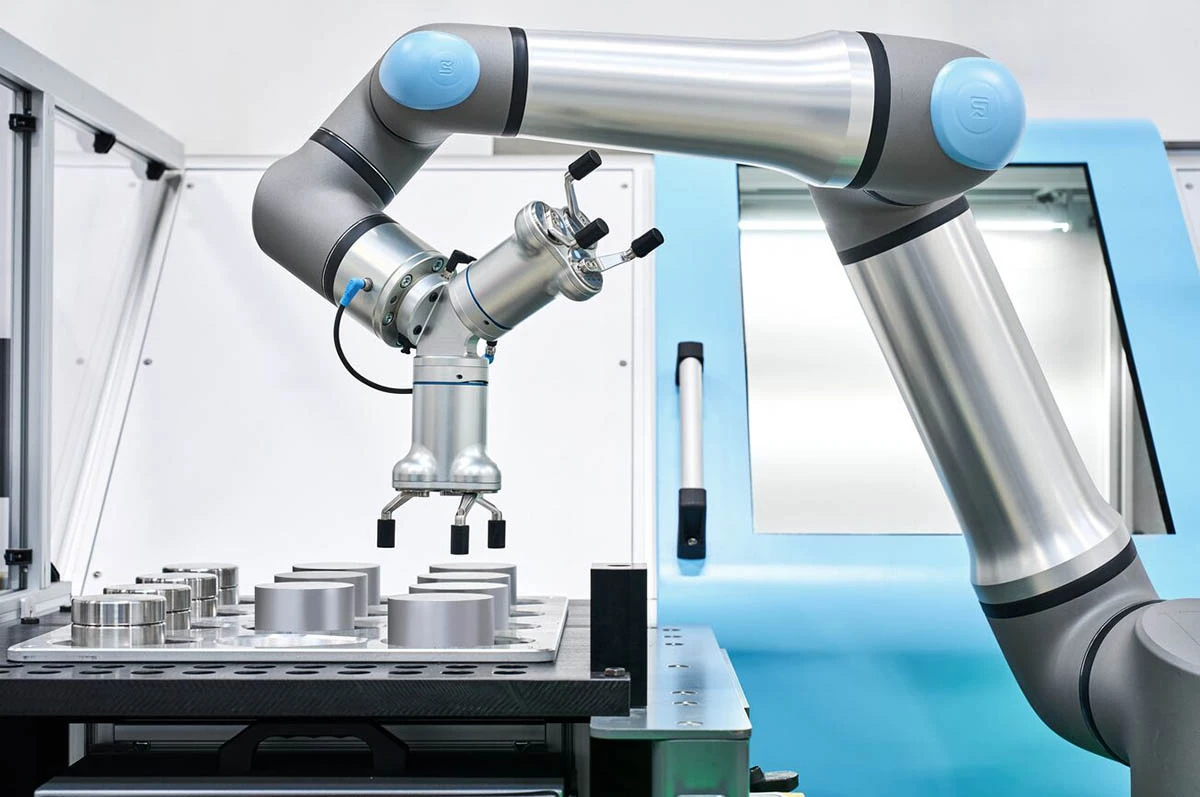
We offer you a flexible ecosystem that radically simplifies this integration: Our cobots support common industry standards and can be connected directly to your CNC or injection molding machine via digital I/Os or special interface kits. Combined with the versatile gripping systems (e.g., double grippers) from our certified partners, you get a complete solution that is ready for immediate use without complex PLC programming and maximizes your machine uptime.
cobot
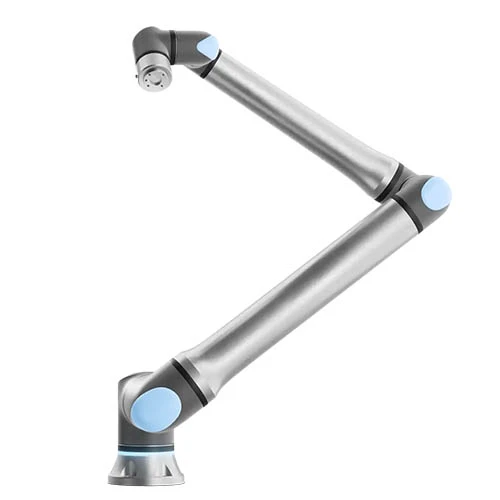
Whether it's a small CNC lathe or a large press: with payloads from 3 to 35 kg and reaches of up to 1750 mm, we have the right arm for every machine size. Particularly popular: the UR10e or UR20 for long reaches in deep machine rooms.
About cobots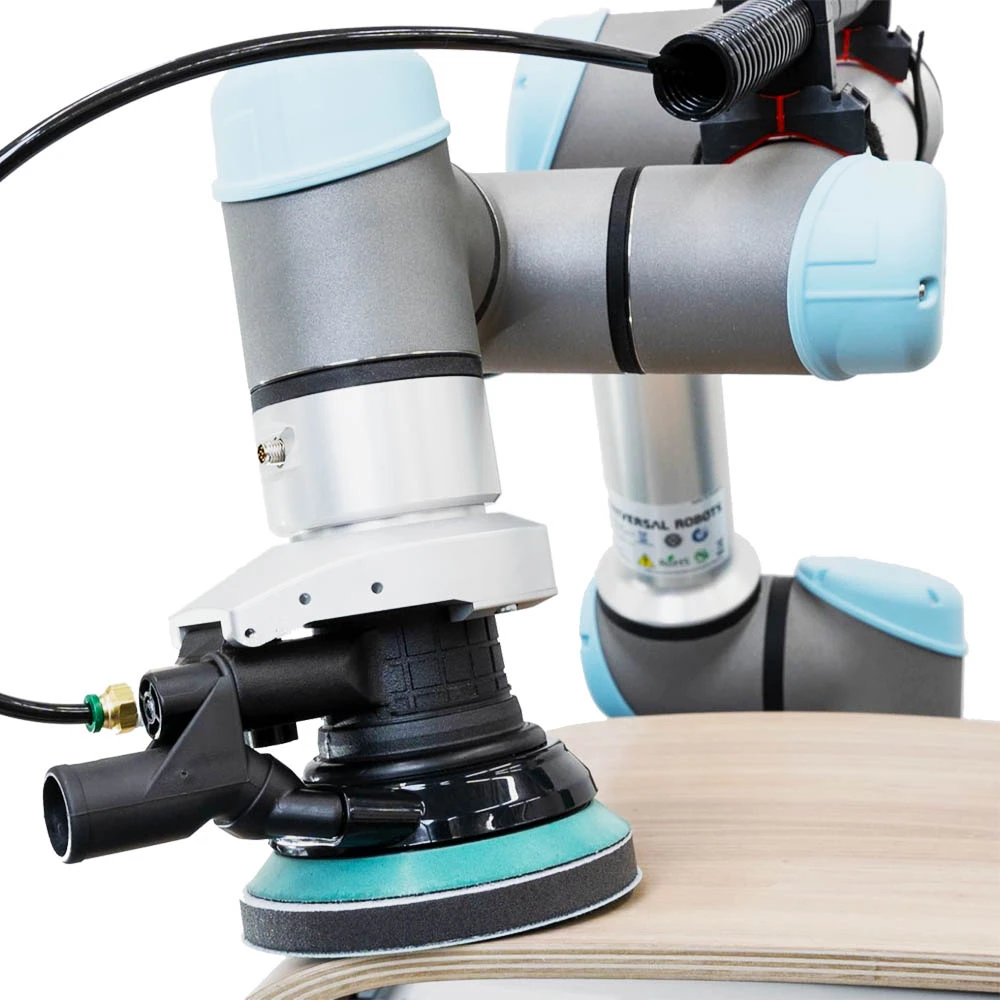
Gripping technology & end effectors
Whether vacuum, magnetic, or finger grippers: use double grippers to halve the cycle time (insert blank and remove finished part in one step). Our partners such as Robotiq and OnRobot offer "UR+" certified gripper that can be controlled directly via software on the robot tablet.
About the grippers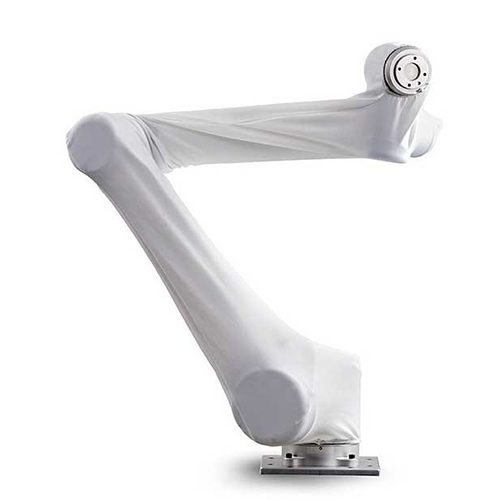
Interface modules
With the IMMI option (Injection Molding Machine Interface) and other gateway solutions, you can integrate the cobot deeply into the machine control system. This means that the robot knows exactly when the door is open and the part is ready for removal.
About the interface modulessolution finding
1. Process analysis We examine your machine and the variety of parts. What are the cycle times? How heavy are the parts? Does the robot need to open doors or blow out chips? This is where we define the requirements.
2. Accessibility study We use a simulation to check whether the cobot can reach all points in the machine room without colliding. We ensure that the robot arm can load and unload the machine without hindering the operator.
3. Integration & interface testing We install the cobot and connect it to your machine (e.g., CNC or injection molding). We set up communication and test the safety stop and signal exchange to ensure smooth operation.
4. Training & Support We show your machine operators how to operate the cobot, restart it in the event of malfunctions, and convert it for new parts. This turns your employees into robot pilots.


Get in touch with us